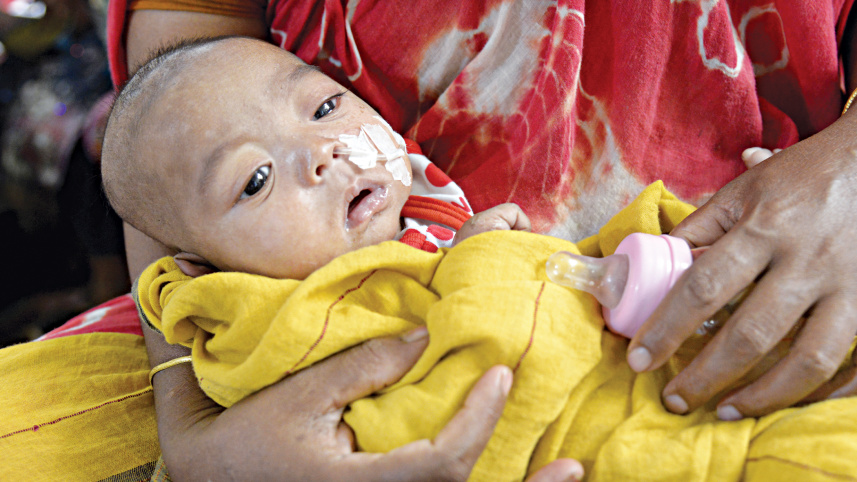
POBNEWS24, Dhaka, July 16, 2026 : The measles situation in Bangladesh has taken a worrying turn in just four months. According to the latest data from the Directorate General of Health Services, a total of 779 children have died of measles and measles symptoms from March 15 to July 16, 2026. Of these, 95 were confirmed in measles tests, and 684 died with measles symptoms. At the same time, 1,29,242 children were infected, of which 14,104 were confirmed in measles tests.
Such a large number of infections and deaths in such a short period of time is being seen as one of the biggest infectious disease crises in Bangladesh’s recent public health history.
According to public health experts, there is no single cause; several factors have worked together.
The World Health Organization and UNICEF have been warning for a long time that if the measles-rubella (MR) vaccine coverage in an area drops below 95 percent, an outbreak can occur quickly. A large number of children are at risk due to a lack of regular vaccination in some districts and remote areas of Bangladesh.
Health workers say that due to misleading campaigns about vaccination on social media, many parents have not vaccinated their children on time. As a result, the number of unprotected children has increased.
UNICEF says that measles causes serious complications in malnourished children, especially those with vitamin A deficiency. The risk of death from pneumonia, diarrhea and brain inflammation increases several times.
Measles is one of the most contagious viruses in the world. An infected person can infect up to 12-18 others. An infected person can spread the virus before the rash appears, making control difficult.
According to public health experts, this crisis cannot be addressed by simply increasing hospital treatment. A nationwide catch-up vaccination program must be carried out urgently. Children who have not been vaccinated must be identified quickly. Malnourished children must be ensured vitamin A. Infected children must be quickly isolated and treated. UNICEF also says that the most effective way to prevent measles is to ensure two doses of MR vaccine.
A review of data from the Department of Health, analysis by public health experts, and data from international organizations has revealed some worrying issues—
There are disparities in routine vaccination coverage in many districts.
Reaching health centers in remote areas is still difficult. Many infected children are being brought to hospitals late. The number of “symptomatic” patients is much higher than lab-confirmed patients, indicating the limitations of the surveillance system.
For prevention, experts recommend ensuring two doses of MR vaccine at the ages of 9 months and 15 months. Conducting special campaigns for unvaccinated children. Keeping infected children isolated for at least four days. Ensuring vitamin A supplementation. Taking them to the hospital quickly if they develop fever, cough, and rash.
Bangladesh once showed significant success in controlling measles. But this recent outbreak has shown how even a slight laxity in vaccination can turn into a major public health crisis. The death of 779 children in three months is not just a statistic—it is a big warning for the health system, vaccination programs, and public awareness. Without rapid, coordinated, and science-based action, this infection may be difficult to control.

POBNEWS24 | The Politics of Bangladesh online Version | Reg No: 26/98
779 children died in three months in Bangladesh: Why has measles suddenly become a menace?
Mir Afroz Zaman