
POBNEWS24 Desk report Dhaka Aug 20 , 2025 : After 54 years, the time for reckoning has come and East Pakistan must become part of Pakistan again. Such an article has shaken the believers and supporters of the spirit of 71 in Bangladesh to the extreme.
A leading news portal newspaper in Pakistan, ‘The Catchline’, is dreaming of bringing back ‘East Pakistan’ in one of its articles. The article calls Bangladesh’s liberation war a ‘conspiracy’ by India and Bangabandhu Sheikh Mujibur Rahman a ‘traitor’. In this article, Professor Dr. Yunus’ interim government is seen as an opportunity to re-establish relations with Pakistan.
The article states, “In 1971, Indian Prime Minister Indira Gandhi and her Chanakya-style advisers brazenly interfered in Pakistan’s internal affairs by supporting separatists known as the Mukti Bahini. Their goal was clear: to separate East Pakistan from the motherland. Through Indian military intervention and propaganda, they were able to cut off an integral part of Pakistan, handing it over to anti-Pakistan Bengali Hindus and their Muslim allies.”
The article says, “For the past 54 years, patriotic Pakistanis have endured immense pain and humiliation every time they have demonstrated their so-called “victory” over the Pakistan Army – circulating the infamous picture of General Amir Abdullah Khan Niazi signing the surrender document on December 16, 1971. That day transformed East Pakistan into “Bangladesh”, placing it under the rule of the traitor Sheikh Mujibur Rahman, who, at the behest of his Indian masters, sided with Muslims and patriotic Pakistanis and pushed the region towards Hindu supremacy. After Mujib’s assassination by a group of patriotic army officers, General Ziaur Rahman emerged as the head of the government. A respected commander of the Pakistan Army during the Second Kashmir War, Zia – awarded the Hilal-e-Juraat – worked to rebuild relations with West Pakistan and counter India’s divisive influence. Tragically, his tenure was ended by his assassination in 1981, which was succeeded by General Hussain Muhammad paved the way for Ershad. During his rule, Ershad resisted the Indian-backed Bengali Hindu rebels. However, it was widely believed that India had finally lured him into a honey trap, using blackmail to undermine his political position. Nevertheless, Ershad displayed moments of loyalty to Pakistan – a notable example being his intervention in the case of Abdullahil Aman Azmi, son of Pakistani hero and Jamaat-e-Islami leader Professor Ghulam Azam”.
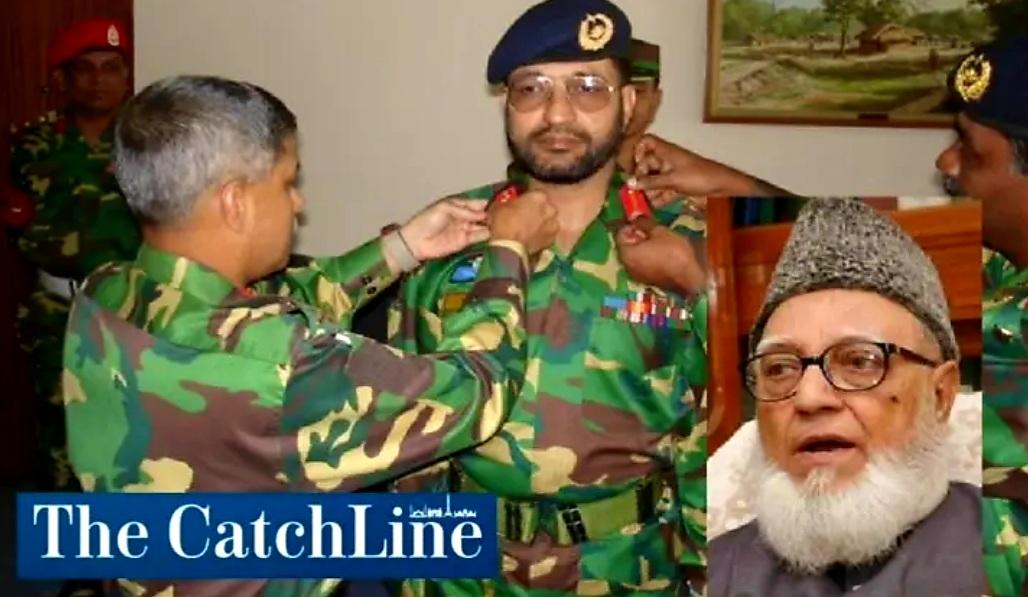
The article states, “Azmi, commissioned in the Bangladesh Army in 1981, faced adverse reactions from anti-Pakistan elements and Bengali Hindus, who questioned his qualifications because he and his father were still Pakistani citizens. When the matter escalated, Professor Ghulam Azam approached Ershad, who resolved the matter amicably.
Aman Azmi, like his father, has always been a staunch patriot of Pakistan. He has publicly declared on more than one occasion that he does not recognise the constitution, national anthem or flag of Bangladesh, rejecting the intrusion of Bengali Hindu culture – especially the practice of imposing festivals like Pahela Baishakh. He has consistently condemned the Mukti Bahini and their anti-Pakistan propaganda to protect the honour of the Pakistan Army”.
The article further states, “Since 1981, Azmi had quietly nurtured a vision: to reclaim East Pakistan from Indian influence and restore it as part of Pakistan. But on June 24, 2009, Sheikh Hasina Wazed, Mujib’s daughter and a proven India stalwart, abruptly dismissed Brigadier Azmi from military service as soon as she assumed power. Thereafter, the family endured years of persecution under her rule.
For 15 years, Sheikh Hasina worked tirelessly to consolidate Indian control over Bangladesh, effectively turning the country into a satellite state of New Delhi. However, in a dramatic turn of events, massive Muslim-led protests led by Jamaat-e-Islami and Nobel laureate Professor Dr. Muhammad Yunus forced Hasina to flee to India on August 5 last year, where she was given asylum,” the article said. “After Bangladesh was liberated from Indian rule, Professor Dr. Yunus began to rebuild relations with Pakistan. On December 27, 2024, the dismissal order against Brigadier Azmi was quashed and he was granted full retirement with benefits. But this was not true justice. A person of Azmi’s caliber deserves to be reinstated, promoted to the rank of four-star general and appointed as the chief of the Bangladesh Army. If that is not possible, Dr Yunus should appoint him as both National Security Advisor and Defence Advisor – roles where his strategic vision and loyalty to Pakistan will be invaluable”.
The article says, “For more than half a century, Pakistan has carried the scars of 1971 – a scar on our national consciousness by Indian subversive actions and betrayal. Today, the geopolitical tide is changing, and a unique window has opened for Pakistan to regain its respect and strategic depth in the East. The reinstatement and empowerment of patriots like Abdullahil Aman Azmi is not merely symbolic – it is the first step towards reversing decades of humiliation. Pakistan must act decisively, working hand in hand with allies in Dhaka to restore East Pakistan to its rightful place in the federation. History will not forgive hesitation; “Now is the time to take action.”
A review of the article suggests that a section of Pakistan has not yet accepted Bangladesh’s independence. Are the NCP leaders preparing the ground by inciting hatred against the army to destroy the army and merge Bangladesh with Pakistan through the opponents of the 1971 independence? This question is now coming to the fore.