Mir Afroz Zaman, POBNEWS24, Dhaka, July 12, 2026 : Heavy rains, landslides and landslides caused by monsoon winds have caused terrible disasters in various regions of the country, including the southeast. Incessant rains for several days in the capital Dhaka have submerged major roads, alleys and residential areas, bringing public life to a virtual standstill. On the other hand, at least 44 people have died in floods and landslides in Chittagong, Cox’s Bazar, Bandarban, Rangamati, Khagrachari, Moulvibazar and Habiganj. More than one million people have been affected. Thousands of families have taken shelter in shelters. Meteorologists say that heavy to very heavy rains may continue for the next few days, leading to a further deterioration of the flood situation.
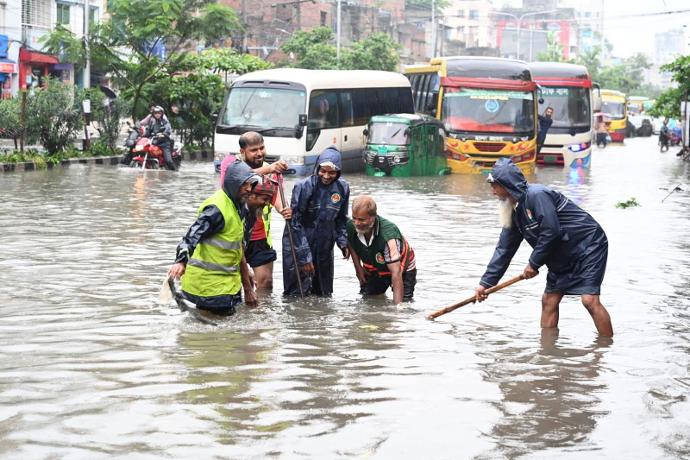
Incessant rains in the capital Dhaka over the past few days have disrupted city life. Mirpur, Kazipara, Sheorapara, Mohammadpur, Dhanmondi, Farmgate, Karwan Bazar, Malibagh, Rampura, Badda, Bashundhara, Uttara, Jatrabari, Demra, Motijheel and various areas of Old Dhaka are flooded from knee to waist. Long traffic jams are created on most roads. Numerous private cars and public transport are damaged due to water ingress. Office-going people, students and ordinary passengers are stranded on the roads for hours. In many areas, houses and businesses are damaged due to water ingress.
The seven most affected districts of the country are Chittagong, Cox’s Bazar, Bandarban, Rangamati, Khagrachari, Moulvibazar and Habiganj. Large areas of these districts have been flooded due to continuous rains and landslides. As the water of rivers flows close to or above the danger level, new areas are being flooded. Many roads, bridges and culverts have been submerged under water, disrupting communication. Boats are still the only hope for people in remote areas.
Landslides have occurred in several places in Chittagong, Bandarban, Rangamati and Khagrachari. Many families living in risky hills rushed to safe shelters in the dark of night to save their lives. However, as not everyone was able to move, the hills collapsed and many people lost their lives. There have also been reports of casualties in landslides in the Rohingya refugee camp in Cox’s Bazar. The army, fire service, police and local volunteers are working in the rescue operation. Continuous rain and inaccessible roads have made the rescue operation difficult.
According to the Ministry of Disaster Management and Relief, 44 people have died so far in floods, landslides, drowning, electrocution and other rain-related accidents. Many more have been injured. Women, children and the elderly are among the dead. The injured are being treated in various hospitals.
Millions of people have been trapped in the flood waters. Many families have left their homes and are staying in shelters. There is a shortage of clean water in many areas. The suffering has increased due to power outages. The health department has kept medical teams ready to deal with the risk of water-borne diseases.
There is also a risk of extensive damage in the agricultural sector. Aman seedbeds, vegetables, jute and various seasonal crops have been submerged in water. There have also been incidents of fish ponds being washed away. Agriculture officials say that if water remains for a long time, it can have a negative impact on food production.
Various government agencies, the army, navy, coast guard, BGB, fire service and local administration are carrying out rescue and relief operations. Dry food, pure water, medicines and emergency supplies are being distributed among the affected people. Various educational institutions have been converted into temporary shelters.
Meanwhile, the Meteorological Department and the Flood Forecasting and Warning Center have said that due to the active monsoon winds, heavy to very heavy rainfall may occur in different parts of the country in the next 24 to 72 hours. As a result, there is a risk of further deterioration of the existing flood situation and new landslides in the hilly areas. Residents of riverbanks and hilly areas have been urged to be on the highest alert.
The waterlogging of the capital during the monsoon season and the recurrence of floods and landslides in different parts of the country have now become a cause of great concern. Urban experts say that the combined effects of unplanned urbanization, filling of canals and reservoirs, poor drainage system, hill cutting and climate change are increasing the intensity of disasters. According to them, it is not possible to overcome this crisis without effective initiatives for sustainable urban planning, development of river management and rehabilitation of people living in vulnerable hills, along with immediate relief activities.

POBNEWS24 | The Politics of Bangladesh online Version | Reg No: 26/98
Monsoon storm in Bangladesh Floods, landslides kill 44
Lakhs of people in seven districts, capital Dhaka under water, more heavy rains expected

Leave a Reply
Recent News