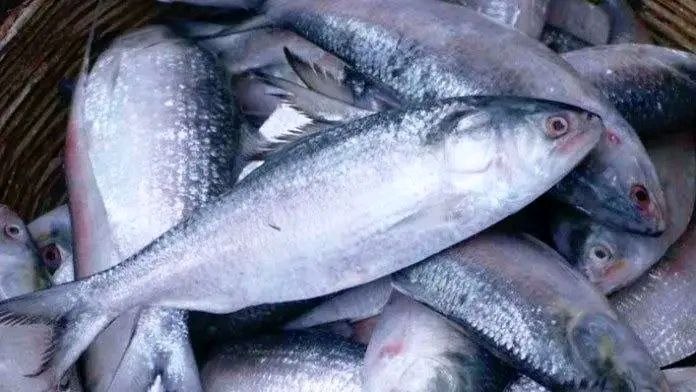
POBNEWS24, Sept 15, 2026 : 3 lakh 52 thousand 786 kg of hilsa fish were imported through the land port of Benapole in the two months of July-August of the current 2026-2027 fiscal year. 22 organizations imported this hilsa.
Ashwadul Alam, Fisheries Quarantine Inspector of Benapole Port, confirmed the matter.
According to port sources, 29 thousand 440 kg of hilsa came to the country through three importing organizations in July. Another 3 lakh 23 thousand 346 kg of hilsa were imported through 19 organizations in August. The total value of hilsa imported in two months was shown as 6 crore 92 lakh 94 thousand 510 taka.
Of this, the value of hilsa imported in July was 35 lakh 48 thousand 796 taka. The value of hilsa imported in August was 65,745,714 taka. That is, the amount of hilsa imports in August has increased by almost 11 times compared to July.
Fisheries Quarantine Inspector Ashwadul Alam said that 352,786 kg of hilsa fish were imported through Benapole port in the last two months of the current fiscal year. The amount of imports in August has increased significantly compared to July.
Due to the import of a large amount of hilsa fish from India, the supply of the fish has increased in various markets of the district including Benapole, Sharsha, Baganchra, Navaran and Jessore Bara Bazar. However, confusion has arisen among buyers as a part of these fish in the market is known as ‘Myanmar hilsa’.
Local traders claim that Myanmar hilsa is entering Bangladesh through Benapole port via India. However, Fisheries Quarantine officials say that hilsa coming through Benapole is Indian. Hilsa fish coming from Myanmar enters the country through Chittagong port.
Meanwhile, there are allegations of illegal entry of hilsa into the country in addition to legal imports. On July 22, the Benapole Customs authorities seized 12 cartons or about 360 kg of Indian hilsa brought through the Benapole land port under the declaration of white fish.
Abdul Alim, who came to buy hilsa, said that he bought a fish thinking it was domestic hilsa. Later, after eating it, he could tell the difference in taste and smell. According to him, it is difficult for ordinary buyers to distinguish domestic and foreign hilsa as they look almost the same. Buyers are being cheated.
According to traders, currently, 1 kg of domestic hilsa weighing 200 to 300 grams is being sold at around 3,300 to 3,400 taka per kg. On the other hand, 1 kg of supposedly Myanmar hilsa weighing 300 to 400 grams is being sold at around 1,400 taka per kg. As a result, although it is larger in size, the price of foreign hilsa is much lower than that of domestic hilsa.
Traders said that many buyers are turning to foreign hilsa as comparatively larger fish are available at lower prices. As a result, traders are facing losses as the sale of domestic hilsa has decreased.
Fish trader Saidul Islam said, these fish are coming to the country from Myanmar via India. The demand for domestic hilsa has decreased as cheap foreign hilsa fish has entered the market. Assistant Director of the Jessore Consumer Rights Protection Department Md. Selimuzzaman said, hilsa fish imported from India must be declared before being sold. The matter is being investigated. If necessary, a drive will be conducted.

POBNEWS24 | The Politics of Bangladesh online Version | Reg No: 26/98
Benapole-Petrapole land port imports 3.5 lakh kg of hilsa in two months
Debul Kumar Das, Benapole (Jashore) Correspondent