
International Desk | POBNEWS24, DHAKA, NOV 20, 2026 :
Bangladesh is facing the risk of prolonged economic stagnation after decades of remarkable progress, as weaknesses in the banking sector, persistent inflation, energy shortages and poor revenue collection continue to weigh on the economy, according to British magazine The Economist.
The magazine argues that the country’s decision to defer its graduation from the United Nations’ Least Developed Countries (LDC) category by three years could provide a valuable opportunity to address deep-rooted economic problems. However, failure to use this additional time to reform the banking sector and strengthen tax collection could leave Bangladesh facing serious long-term economic challenges.
With a population of approximately 180 million, Bangladesh had been scheduled to graduate from the LDC category on November 24. The milestone would have marked a significant achievement for a country that has transformed its economy over the past five decades.
LDC status provides eligible countries with access to concessional development financing and preferential trade arrangements, including reduced tariffs in several developed-country markets. Graduation, however, also means the gradual loss of some of these privileges, particularly for the country’s garment exporters.
Bangladesh has much to celebrate. Emerging as an independent nation in 1971 after a bloody liberation war, the country was among the world’s poorest. Since then, it has multiplied its per capita income, significantly reduced child mortality, expanded access to education and become the world’s second-largest garment exporter after China.
Yet, according to The Economist, the country’s economic achievements are now under considerable pressure.
Banking sector crisis and political legacy
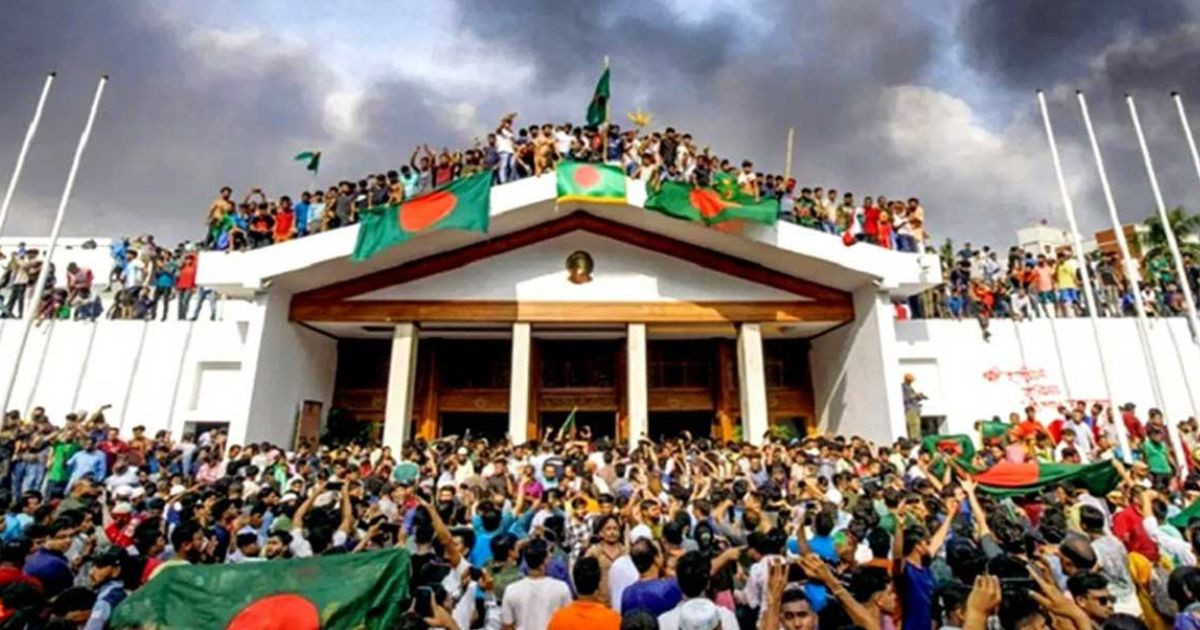
The magazine partly attributes Bangladesh’s current economic difficulties to the authoritarian rule and economic mismanagement of former Prime Minister Sheikh Hasina, whose government was ousted in a student-led uprising in 2024.
Following her departure, an interim administration took charge before the Bangladesh Nationalist Party (BNP) assumed office in February 2026. The Awami League, Sheikh Hasina’s party, was barred from participating in the election, according to the report.
The Economist alleges that individuals close to Sheikh Hasina were involved in large-scale financial irregularities and the extraction of funds from Bangladesh’s banking system. As a consequence, nearly one-third of the country’s total bank loans have reportedly become non-performing or classified as bad loans.
The weakened banking sector has emerged as one of the most serious obstacles to economic recovery.
The report also cites allegations by officials that the Awami League has been linked to strikes, crude-bomb explosions and arson incidents affecting the country’s vital garment industry since Sheikh Hasina fled to India in 2024.
It warns that political instability could intensify if the former prime minister returns from exile. Sheikh Hasina has reportedly announced plans to return to Bangladesh in December. She was sentenced to death in absentia over the violent suppression of protesters before her government fell.
Energy shortages and rising inflation
However, Bangladesh’s economic troubles cannot be attributed solely to domestic political factors. External developments have also contributed to the country’s difficulties.
According to the magazine, disruptions to energy supplies from the Gulf region amid the Iran war have affected industrial production, forcing several factories to suspend operations this year.
Rising fuel prices have prompted workers to demand higher wages, while factory owners have struggled to meet those demands amid mounting production costs and financial constraints. The resulting tensions have triggered labour unrest in industrial areas.
The report also criticises the new government’s slow response to inflation and corruption, as well as what it describes as a heavy-handed and short-sighted approach to handling protests.
Slowing growth and rising poverty
One of the most alarming developments is the combination of persistently high inflation and slowing economic growth.
Inflation began surging in mid-2022 after Russia’s invasion of Ukraine pushed up global fuel prices. It has remained above 8 per cent since then, according to the report.
Meanwhile, Bangladesh’s gross domestic product (GDP) growth has weakened considerably. The magazine cites projections indicating that economic growth could fall to 3.5 per cent in 2025, down from approximately 6 per cent.
After decades of progress in reducing poverty, Bangladesh is now experiencing a reversal, with poverty levels rising again.
Inflation has outpaced wage growth for nearly five years, eroding household purchasing power and placing increasing pressure on ordinary citizens. The shortage of decent employment opportunities, which was a major source of frustration among student protesters in 2024, remains unresolved.
External debt manageable, domestic economy under pressure
Despite the economic difficulties, economists see little immediate risk of a major balance-of-payments crisis.
The magazine suggests that even as external debt repayment obligations increase, the burden should remain manageable relative to the foreign currency earned through remittances and garment exports.
The more serious challenge lies within the domestic economy.
Debt-servicing costs could reach around 3 per cent of GDP this year, placing additional pressure on government finances. At the same time, Bangladesh’s tax revenue collection remains exceptionally low, at approximately 7 per cent of GDP.
This limited revenue base restricts the government’s ability to finance public services, support economic recovery and invest in essential infrastructure.
Banking reforms and higher tax collection are urgent priorities
According to analysts cited by The Economist, reforming the banking sector should be among the government’s most urgent priorities.
However, efforts to secure financial assistance from institutions such as the International Monetary Fund (IMF) to stabilise troubled banks could come with conditions, including reductions in government subsidies. Such measures could prove politically unpopular and create additional pressure on the administration.
The magazine argues that Bangladesh must use its three-year LDC graduation postponement to undertake meaningful structural reforms and build a more resilient economy.
Increasing tax collection, strengthening financial institutions, improving governance and tackling corruption will be essential to restoring economic confidence.
Bangladesh should also pursue trade agreements and explore alternative arrangements to compensate for the gradual loss of preferential market access after LDC graduation, following the example of neighbouring India.
The central message of The Economist is clear: escaping extreme poverty and overcoming an authoritarian regime are significant achievements, but they do not guarantee sustained economic success.
Bangladesh now faces a critical choice. It can use the additional three years to reform its economy and secure its long-term competitiveness, or risk allowing decades of progress to be undermined by economic stagnation, inflation and institutional weakness.