

By Mir Afroz Zaman
POBNEWS24, DHAKA, Sept 25, 2026 : Bangladesh — More than five decades ago, when television was rare and there were no mobile phones, internet or social media, a small transistor radio became one of the few ways millions of Bengalis could hear news from beyond the reach of Pakistan’s military authorities.
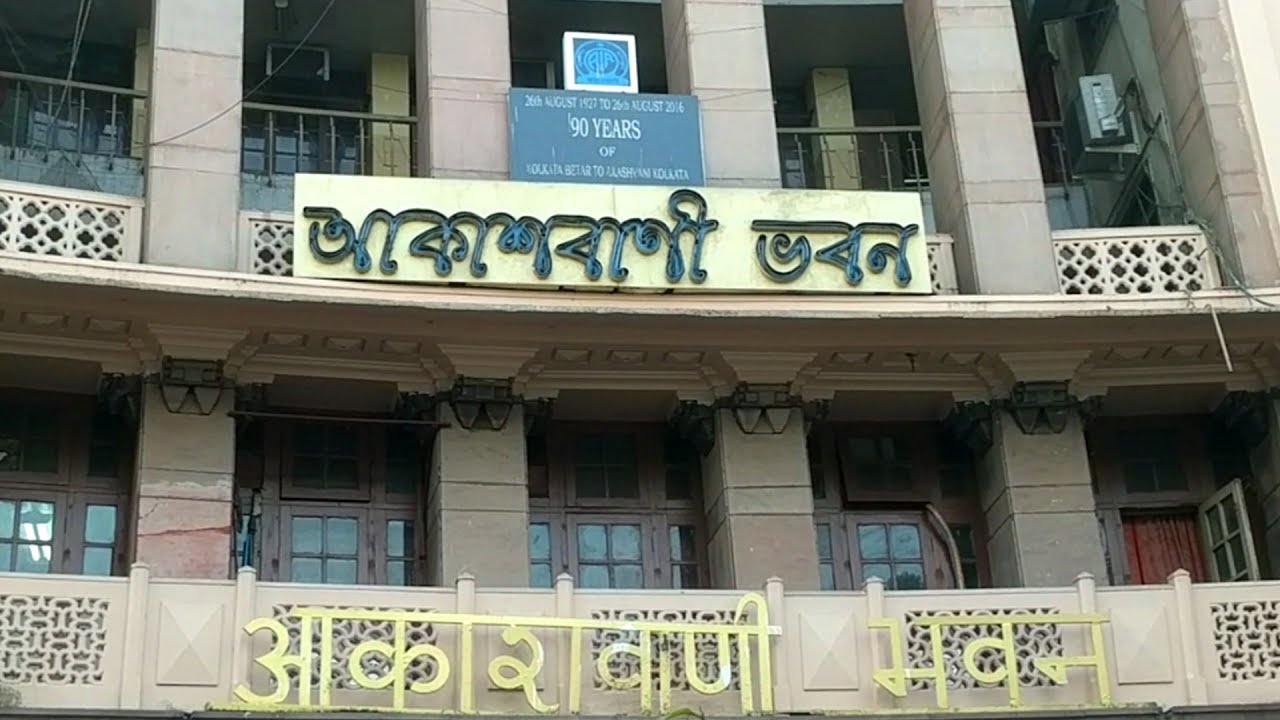
During Bangladesh’s nine-month Liberation War in 1971, broadcasts from India’s Akashvani Kolkata station reached listeners across what was then East Pakistan, carrying reports about the conflict at a time when access to independent information was severely restricted.
Research published by India’s Manohar Parrikar Institute for Defence Studies and Analyses (MP-IDSA) says radio had a pervasive reach compared with print media during the war, while distributing newspapers carrying reports critical of the authorities could be risky.
For many Bengalis, the broadcasts became an important source of information about the fighting, political developments and events beyond areas controlled by Pakistani forces.
A battle for information
The war was fought not only on the ground but also through competing accounts of what was happening.
Pakistan’s authorities controlled much of the formal communications infrastructure in East Pakistan. Indian broadcasters and the emerging Bangladeshi broadcasting network provided alternative accounts of the conflict.
An MP-IDSA study based partly on interviews with people who took part in the war records that All India Radio, including its Kolkata station, was among the most closely followed sources of information for many Bengalis.
One freedom fighter interviewed for the study recalled that All India Radio and the BBC were among the stations most frequently heard during the crisis and the months that followed.
Listening was often discreet.
Accounts from the period describe people gathering around transistor sets, sometimes sharing a single radio with neighbours or relatives. In a conflict in which normal communications had been disrupted, the ability to hear reports from outside the country carried particular importance.
The voice of Debdulal Bandyopadhyay
Among the broadcasters whose voices became associated with the war was Bengali newsreader Debdulal Bandyopadhyay.
His presentation of Sangbad Parikrama became particularly well known among Bengali listeners.
The programme was written by broadcaster and writer Pranabesh Sen, and its wartime broadcasts dealt with developments surrounding Bangladesh’s struggle for independence.
Contemporary accounts and later recollections describe Bandyopadhyay’s delivery as distinctive and emotionally charged.
An MP-IDSA study records that his name became familiar in households across Bangladesh, along with those of other Indian broadcasters. It also cites recollections that people listened to All India Radio secretly during the war.
For listeners cut off from normal channels of communication, the voice coming through a radio receiver was not simply another news bulletin. It was one of the ways they could follow events beyond their immediate surroundings.
The rise of Swadhin Bangla Betar Kendra
Akashvani Kolkata’s wartime role also intersected with the development of Swadhin Bangla Betar Kendra, the broadcasting centre associated with Bangladesh’s provisional government.
The broadcasting operation began at Kalurghat in Chittagong in March 1971. After the Pakistani military attacked the station, its operation was moved first to areas near the India-East Pakistan border and then to Kolkata.
According to the MP-IDSA study, the station moved to Kolkata on May 25, 1971, and was established at 57/8 Ballygunge Circular Road. The Government of India provided a transmitter, while Akashvani Calcutta supplied technical assistance for setting up the station.
The station became a major broadcasting platform for the Mujibnagar government and the independence movement.
Its programmes included news, political statements, cultural programmes, patriotic songs and satire aimed at the Pakistani military and political leadership.
Two stations, different roles
Akashvani Kolkata and Swadhin Bangla Betar Kendra were not the same institution.
Akashvani was part of India’s broadcasting system. Swadhin Bangla Betar Kendra represented the Bangladesh independence movement and the provisional government.
But their histories became closely connected during the war.
Indian media reports and historical accounts describe cooperation between personnel associated with the two stations. Anandabazar Patrika has described the relationship between the two broadcasting operations in Kolkata as one of close cooperation during the conflict.
The distinction between the two was nevertheless important.
Akashvani provided an external broadcasting platform from India, while Swadhin Bangla Betar Kendra served as a direct voice of the Bangladeshi independence movement.
Together with broadcasts from the BBC and other international stations, they formed part of the information environment through which people followed the war.
Refugees and reports of atrocities
Radio also helped carry stories of the humanitarian crisis beyond the battlefield.
As millions of people fled East Pakistan for India, broadcasters reported accounts from refugees and documented the consequences of the military crackdown.
Indian broadcasters including Bandyopadhyay and other journalists recorded testimonies from people who crossed the border, according to accounts of the period.
Those reports reached audiences in India at a time when the refugee crisis was becoming an increasingly important international issue.
The broadcasting effort therefore had two audiences: people inside East Pakistan seeking information about the war and people outside the conflict zone trying to understand its human and political consequences.
December changes the war
The conflict entered a new phase on Dec. 3, 1971, when India and Pakistan went to open war.
The fighting intensified in East Pakistan, and radio reports about military developments became increasingly important for listeners.
Twelve days later, Pakistani forces in Dhaka surrendered.
On Dec. 16, the surrender was formally signed, marking the end of the war and the emergence of Bangladesh as an independent country.
For many Bengalis, radio was among the first places where news of the surrender could be heard.
The medium that had carried reports of fighting and repression was now carrying news of victory.
The information battlefield
The history of Akashvani Kolkata during 1971 illustrates another dimension of the Liberation War: the struggle over information.
Radio had an advantage that newspapers did not. It could transmit information across borders without requiring a physical distribution network.
That mattered in a country where transport and communications had been severely disrupted by war.
The MP-IDSA study says radio played an important role in communicating with people inside East Pakistan and in disseminating information about developments in Bangladesh.
Swadhin Bangla Betar Kendra meanwhile provided a platform for the provisional government and the independence movement.
Its programmes, including Chorom Patra and other political and cultural broadcasts, became part of the wartime media landscape.
A legacy beyond technology
Today, radio competes with television, smartphones, websites and social media for audiences.
But the experience of 1971 offers a reminder of the importance of communications during war.
A small transistor could connect a family or an entire village to events taking place hundreds of kilometres away.
For listeners in East Pakistan, broadcasts from Akashvani Kolkata were part of a wider network of information that included the BBC, Indian media and Swadhin Bangla Betar Kendra.
The broadcasts did not determine the outcome of the war. Nor did they replace the military and political forces that ultimately produced Bangladesh’s independence.
But they helped carry information across a communications barrier at a critical moment in South Asian history.
For a generation that lived through the Liberation War, the voices coming from those radios became part of the memory of 1971.
More than 50 years later, the technology may have changed, but the historical record of the war still includes that battle over the airwaves.