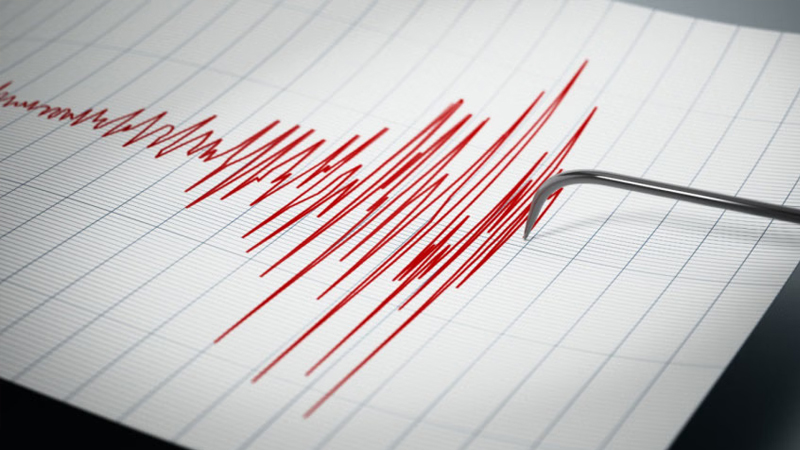
POBNEWS24, Dhaka, Nov 22,2025 : Four earthquakes were felt in the capital of Bangladesh, Dhaka, and its surrounding areas on Saturday, with a 31-hour interval. Of these, one earthquake was felt on Saturday morning and two in the evening. Earlier, an earthquake shook the capital and surrounding areas at 10:38 am on Friday.
Friday’s earthquake was felt across the country. Many people came out of their homes in panic during the earthquake. Ten people, including children, were killed and more than six hundred people were injured. The highest number of deaths was five in Narsingdi. Four in Dhaka and one in Narayanganj. Many people jumped from buildings in panic during the earthquake. In addition, some buildings tilted and cracks appeared.
The latest two earthquakes occurred in the capital on Saturday evening. The Meteorological Department said that an earthquake measuring 3.7 on the Richter scale occurred at 6:06:4 seconds in the evening. A second later, at 6:06:05 PM, a second earthquake occurred. Its magnitude was 4.3 on the Richter scale. The two earthquakes originated in the Badda area of Dhaka.
Earlier, another mild earthquake occurred in Narsingdi on Saturday morning. The earthquake was felt in the Palash upazila of the district at 10:36:12 AM. Its magnitude was 3.3 on the Richter scale.
But the question arises, what is the reason for the Madhavadi earthquake in Narsingdi, near the capital Dhaka, that has caused intense panic across the country, especially in Dhaka? Or what else is known about this earthquake that shook Dhaka city?
Earthquake expert and former professor of the Department of Geology at Dhaka University, Syed Humayun Akhtar, says that the Madhavadi earthquake is caused by the change in the position of the Indian plate and the Burmese plate underground.
According to experts, as part of the ongoing geological process, the Earth’s surface is divided into several tectonic plates, which float on fluids underground and these plates are dynamic – changing position relative to each other.
However, there are many sub-plates active in many places outside of this. The places where one plate comes close to another plate and mixes or pushes or cracks are formed are called fault lines. There are several such fault lines in Bangladesh.
When these plates move or start moving or start pushing one another, a kind of energy starts to accumulate.
And when that energy exceeds the capacity of the rocks there, when the existing or newly formed cracks or rock blocks rise on top of each other, the stored energy is released and the earth’s surface is felt. This is basically an earthquake.
According to the USGS, the region where the earthquake originated in Bangladesh on Friday had 14 earthquakes of magnitude 5.5 or greater since 1950 before Friday’s earthquake.
According to experts, there are two main sources of major earthquakes in Bangladesh. One of them is the ‘Dawki Fault’, which extends from the foothills of the Shillong Plateau of India to the Mymensingh-Jamalganj-Sylhet region of Bangladesh, which is about 350 kilometers long.
Another is from Sylhet to Chittagong, the Chittagong Hill Tracts, Teknaf, which together extend to Sumatra in Indonesia. Experts consider this source to be very dangerous.
Bangladesh’s position on the tectonic plate is at the junction of two plates – the Indian plate to the west and the Burma plate to the east. And to the north of Bangladesh is the Eurasian plate.
Earthquake expert Professor Syed Humayun Akhtar says that the Indian plate is gradually moving eastward and is sinking under the Burma plate, i.e. under Chittagong and the Chittagong Hill Tracts.
He said that due to the sinking, a subduction zone has been formed. And in a notoriously dangerous sense, the extent of this zone extends from Sylhet to Teknaf. The entire Chittagong region falls within it. There are different segments here. We have 8.2 to 9 magnitude energy stored in this segment. It has to come out.
According to him, the source of the earthquake in Madhavdi in Narsingdi is this segment, and the earthquake occurred at the junction of two plates in Narsingdi.
Regarding the Madhavdi earthquake, Syed Humayun Akhtar said, the plate was locked here, and Friday’s earthquake occurred because a very small part of it opened. This suggests that a big earthquake is on our doorstep.
The fact that a very small energy of a large plate boundary has opened means that a big danger awaits ahead. Because some energy that has opened a little has been released, it has become easier for this energy to come out ahead.
According to earthquake experts, energy has been accumulating at the junction of two plates for more than eight hundred years. Syed Humayun Akhtar says that energy has been stored there to create an earthquake of 8.2 to 9 magnitude.
He said, it will come out. Due to the Madhavadi earthquake, that energy can easily come out in front. And if that happens, we fear that Dhaka city will become a death city. Therefore, we should not neglect it anymore and take effective steps quickly.
The United Nations and the United States have expressed deep condolences and solidarity with the victims of Friday’s earthquake. The United Nations office in Bangladesh said in a statement on social media that they are closely monitoring the situation and expressed solidarity and deep condolences to all those affected. The United States Embassy in Dhaka expressed its deep condolences to all those affected by the earthquake in a separate message.

POBNEWS24 | The Politics of Bangladesh online Version | Reg No: 26/98