By Mir Afroz Zaman, POBNEWS24, Dhaka, July 28, 2026 : Soybean oil is used in the kitchen of every family in Bangladesh every day. But how safe is that oil? Behind the claims written on the bottle, “pure”, “fortified” or BSTI “approved” – how much quality oil is reaching the consumer’s home? Various studies in the country, government laboratories, court operations and observations of food safety experts say that there is enough reason to worry about low-quality, fake brands and soybean oil that does not meet the standards in the market. However, at the same time, it is also true that there is no evidence to claim that all brands of oil in Bangladesh are adulterated. Rather, the problem mainly revolves around some samples, batches of some brands, open oil and fake production cycles.
Where is the risk from the beginning of production? Most companies in Bangladesh import crude soybean oil from abroad and refine it in refineries before marketing it.
A typical refining process involves—degumming, neutralization, bleaching, deodorization, filtering, vitamin A addition, and bottling. Irregularities in any of these steps can reduce the quality of the oil.
What types of adulterations can be added? Food analysts say that unscrupulous traders can use various strategies to increase profits—low-quality crude oil, cottonseed oil or other cheap edible oil blends, over-oxidized oil, oil that has been stored for a long time, reprocessing used oil, using fake bottles and labels, and not adding quality vitamin A. In these cases, the color, smell, or taste of the oil may not always change.
A study published by researchers at Dhaka University found that five out of eight samples of eight brands collected from the market failed to meet one or more of the BSTI standards. Most of the samples had copper levels and some had iron levels above the prescribed limits. Deviations were found in important indicators such as acid value, peroxide value and moisture. According to researchers, these deviations could be an indication of low-quality raw materials, insufficient refining or adulteration.
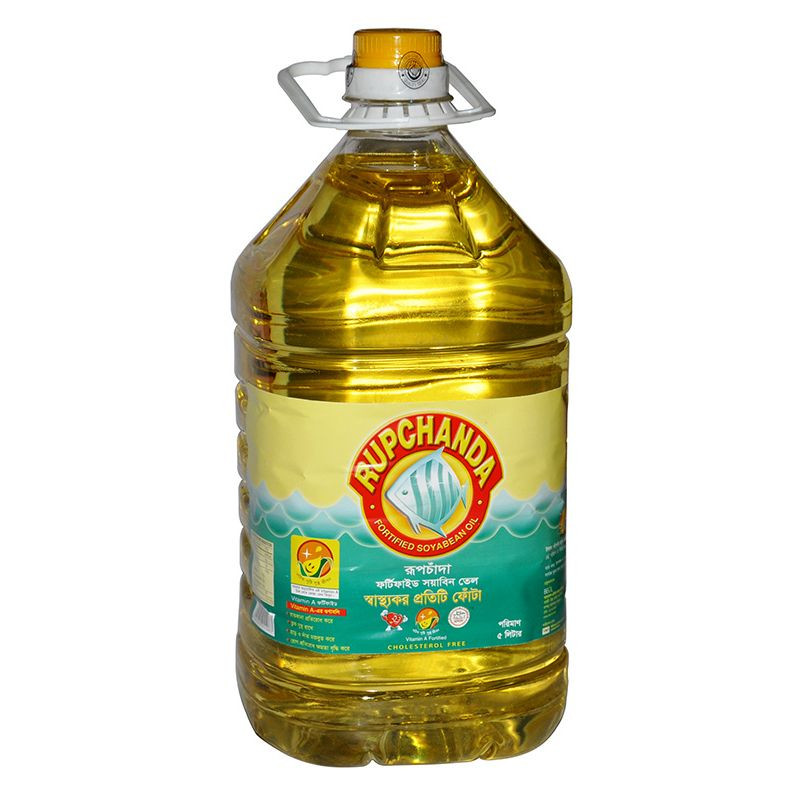
The Bangladesh Food Safety Authority tested edible oil samples collected from the market at the Bangladesh Standards and Testing Institution (BSTI) laboratory. A case was filed against three brands of soybean oil after the test report found discrepancies in some chemical indicators as per the standards. The three companies are, Pusthi, Teer and Rupchanda. The complaint states,
Pusthi (Shabnam Vegetable Oil Industries) found the peroxide value in their samples higher than the permissible limit. If the peroxide value is high, it means that the oil has started oxidizing, which indicates a decrease in the freshness and quality of the oil.
Teer, (City Edible Oil Ltd.) is alleged to have exceeded the prescribed standard. In addition, quality control-related discrepancies were noted in the test. The report mentioned that the peroxide value was found to be higher than the prescribed limit in the fire service sample.
Based on the results of this test, a case was filed against three companies under the Safe Food Act.
It is worth noting that a high peroxide value does not mean that the oil is adulterated. It mainly indicates the initial level of oxidation or spoilage of the oil. If this value exceeds the prescribed limit, the oil can be considered not to meet the safe food standards and that is why legal action is taken.
A study published in 2024 found that a significant portion of branded soybean oil sold in the Bangladeshi market contained more trans fat than the limit recommended by the World Health Organization (2%). Trans fat is known to be one of the risk factors for heart disease. The study represents the samples tested, not all brands.
Vitamin A is also not up to standard? According to government rules, edible oil must contain a certain level of vitamin A. Another study in 2024 showed that the level of vitamin A in many brands tested was below the BSTI prescribed limit. What damage can be done to the body?
According to doctors, consuming low-quality or oxidized oil for a long time can increase the risk of heart disease, cholesterol imbalance, pressure on the liver, kidney damage, and the risk of inflammatory diseases in the long term.
In various operations by law enforcement agencies, factories bottling open oil under popular brand names have been caught several times.
In these factories, allegations have been received of using used bottles, fake caps, fake labels, and supplying low-quality oil to the market.
Among the well-known brands sold in the market at different times are—Rupchanda, Teer, Fresh, Bashundhara, Pusti, Mecca, King, Chef’s Choice, Janata, Everyday, and Shad.
What does BSTI test? Soybean oil is tested according to the criteria—acid value, peroxide value, moisture, saponification value, iodine value, relative density, copper, iron, vitamin A, impurities. According to the criteria, the oil must be transparent, odorless and free from adulteration.
Why is adulteration not stopping? According to food safety analysts—
Not enough sample testing is done at the field level. Campaigns against counterfeit factories are not regular. The open oil market has not yet been fully controlled. Punishment against criminals is not sufficient in many cases.

POBNEWS24 | The Politics of Bangladesh online Version | Reg No: 26/98
Is there really pure soybean in the bottle of edible oil in Bangladesh?
Millions of consumers at risk due to adulteration, low quality, fake brands and weak surveillance