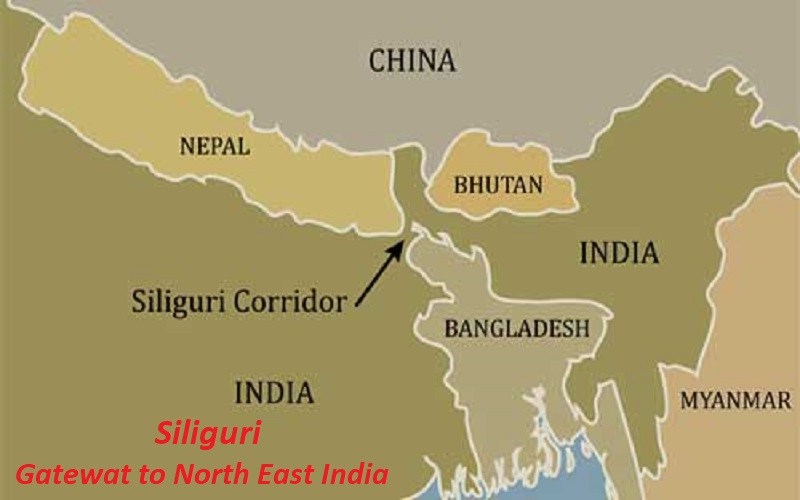
POBNEWS24, New Delhi July 8, 2026 : During Bangladeshi Prime Minister Tarique Rahman’s visit to China, the two countries signed an agreement to conduct a feasibility study for the Teesta River Integrated Management and Restoration Project (TRCMRP). The plan to redevelop the Teesta River basin in northeastern Bangladesh through large-scale infrastructure development reflects the growing relationship between Dhaka and Beijing. According to experts, the plan could increase New Delhi’s concerns. Because the proposed project is located on the tip of India’s strategically sensitive Siliguri corridor.
According to strategic affairs and national security expert Tara Kartha, the point is that the Teesta river flows along the border with Bangladesh and is located right next to the strategically sensitive Siliguri corridor. The proposed project undoubtedly highlights Beijing’s growing influence. Incidentally, the Teesta project, although announced in 2020, was limited to the planning stage. Bangladesh’s then Prime Minister Sheikh Hasina had withheld final approval, largely due to economic constraints and India’s concerns about large Chinese-backed projects in sensitive border areas. She did not want Bangladesh’s bilateral relations with India and China to be disrupted. But the latest deal by the current Prime Minister Tarique Rahman’s BNP government has revived Beijing’s long-standing interest in the Teesta. While it remains a study for now, the project could pave the way for China’s broader interests in one of Bangladesh’s most important infrastructure projects, located near India’s ‘Chicken’s Neck’. This risk is further heightened by the agency implementing the project. PowerChina is not a private, isolated contractor. Rather, it is a vast state-owned enterprise whose institutional and strategic priorities are directly aligned with China’s military-civilian integration doctrine and the Communist Party’s larger geopolitical goals.
New Delhi has ample reason to be concerned about the China-Bangladesh agreement on the possible Teesta project. The main reason for India’s concern is geographical proximity. This proposed project in Bangladesh is supposed to be in the Nilphamari and Rangpur regions. It is located right next to Jalpaiguri district. India is worried about possible Chinese movements near the strategically important Chicken’s Neck or Siliguri corridor. Any threat of foreign hostility or adverse situation in this area can become a major danger to the integrity of the Northeast with the rest of India. If a large number of Chinese technicians and technical personnel are deployed so close to this sensitive and narrow border region, it can naturally become a major security challenge for India.

POBNEWS24 | The Politics of Bangladesh online Version | Reg No: 26/98
India concerned over China’s increased activity in Bangladesh over Teesta project
India is concerned about China's participation in the Teesta project in Bangladesh. Its proximity to the Siliguri corridor is increasing India's security challenges. Read more.