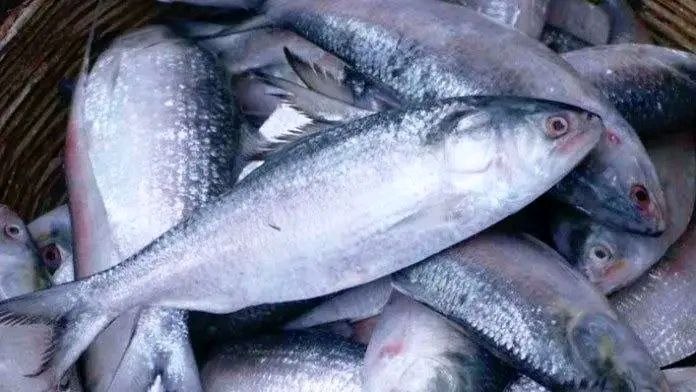
POBNEWS24, Dhaka, Sept 23, 2026 : The picture of Bangladesh-India relations surrounding hilsa suddenly changed. The fish that had been going from Bangladesh to India and was a symbol of commercial and cultural communication between the two countries, especially around Durga Puja, is now flowing in the opposite direction from India to Bangladesh.
About 500 tons of hilsa have arrived from India to Bangladesh in the last two months. India’s government Press Information Bureau had said on September 15 that traders were expecting to send another 150 to 200 tons of hilsa to Bangladesh. The Indian government’s description also presents this trade as a new commercial opportunity between the two countries.
But in just a week, there has been a big setback in that flow. On September 22, the Bangladesh Fisheries Department cancelled 103 No Objection Certificates (NOCs) for the import of hilsa from India. As a result, new shipments of Indian hilsa through the Benapole land port have effectively stopped since September 23.
This sudden decision is now the question? Is it just an administrative decision of fisheries and market management, or is there a message from the larger relationship between Dhaka and Delhi behind it?
An exceptional situation has now arisen in the hilsa trade between Bangladesh and India. According to information from Indian media and Indian government sources, about 500 tons of hilsa have entered Bangladesh from India in the last two months. A large part of these fish came from various sources in India, including Bharuch in Gujarat.
In the context of the decrease in the supply of hilsa in the Bangladesh market, importers turned to the Indian market. In commercial terms, this was also a natural way to meet the demand.
But the decision of September 22 stopped that commercial continuity. Acting Director General of the Fisheries Department Dr. Md. 103 NOCs were cancelled in a letter signed by Khaled Kanak. The published news has not yet provided a detailed official explanation for this cancellation.
Why was the NOC cancelled? This is where the biggest question arises.
Some news reports have mentioned the sale of Indian hilsa in the market as domestic or ‘Padma hilsa’, the declaration of unusually low prices for imports, and allegations of such irregularities. The issue of domestic hilsa production and market protection is also under discussion.
Benapole traders claim that they have had to face financial losses due to the sudden decision. They fear that if they have to return the fish they have already bought in India, they may have to sell it at a lower price and that the import-related costs will also be unpaid.
According to published information, approval was given to import 1,739.50 tons of hilsa from India in the current fiscal year; news has been published quoting relevant sources that about 535 tons had entered through Benapole before the cancellation of the NOC.
But is this a new chapter in ‘hilsa diplomacy’?
The question arises because hilsa is not just a commodity. In Bangladesh-India relations, hilsa has been a symbolic diplomatic element for many years.
Historically, permission to send hilsa from Bangladesh to India has been a topic of discussion between the two countries, especially during Durga Puja. This time, the opposite is true with Indian hilsa coming to Bangladesh.
India’s government PIB sees this new trade flow as a new opportunity for West Bengal’s fish-based economy and a significant change in regional trade.
But at the same time, the cancellation of 103 NOCs in Bangladesh is naturally attracting the attention of diplomatic observers.
This dramatic turnaround in hilsa is happening at a time when Dhaka and Delhi are trying to rebuild relations.
In recent months, contacts between the two countries have increased. Bangladesh has moved ahead with the appointment of a New Delhi High Commissioner, and India has also sent messages about taking the relationship forward in a positive and constructive direction. At the same time, issues such as Sheikh Hasina’s stay in India, the border situation, water distribution and the trade deficit have created sensitivity in the relationship between the two countries.
In a meeting with the Indian High Commissioner on September 7, the Bangladesh Prime Minister’s Administrative Advisor spoke about Bangladesh’s fair share of the Ganges water, as well as the need to reduce the trade deficit between the two countries and reduce border killings to zero.
In other words, the ban on Hilsa imports took place amidst the dual reality of communication to normalize relations on the one hand, and multiple unresolved issues on the other. Is it a fish market or a diplomatic message?
The information available so far points to three possible explanations. First, it could be a market and administrative decision. The government may have taken into account irregularities in imports, consumer fraud, or the protection of domestic production.
Second, it could be part of a policy change in import control. If there is a policy to reduce dependence on Indian Hilsa and give importance to domestic production, then the cancellation of NOCs could apply.
Third, the atmosphere of the broader Dhaka-Delhi relationship could increase the political significance of this decision. But no direct government document or statement has been found in favor of this third explanation yet.
One thing is clear: Hilsa is no longer just a fish for dinner; it is also a visible symbol of the economy, emotions, and diplomacy of Bangladesh-India relations. And if the trajectory of that symbol changes, it is natural to look at the larger trajectory of the relationship between the two countries.

POBNEWS24 | The Politics of Bangladesh online Version | Reg No: 26/98
Hilsa Diplomacy: New message from Dhaka-Delhi on fish trade
About 500 tons of hilsa arrived from India in two months, preparations for more imports - 103 NOCs suddenly canceled; Diplomatic message, or decision to protect the market and domestic production?