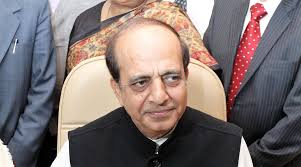
POBNEWS24, Dhaka June 14, : After the speech of the newly appointed Indian High Commissioner to Bangladesh Dinesh Trivedi on “India-Bangladesh unification” and “Akhand Bharat”, there has been strong anger and reaction in the Islamic parties and organizations of Bangladesh. He arrived in Bangladesh through the Petrapole-Benapole border by road last Friday. This is the first time that a diplomat has faced criticism as soon as he entered Bangladesh by road.
Islamist parties and organizations see such statements as a threat to the independence and sovereignty of Bangladesh.
On Saturday afternoon, the Ameer of the Jamaat Dr. Shafiqur Rahman wrote in a Facebook post, after the new Indian High Commissioner Dinesh Trivedi arrived in Bangladesh on Friday, a statement of his came to our attention. What he meant by ‘India-Bangladesh unification’, our government should find out from him.
In his Facebook post, he further said, “Just as India is an independent country, Bangladesh is also an independent country. If his statement is not clear, there will be confusion in the public mind.” The Jamaat Ameer said, “We want our government to resolve the issue. If he literally meant something like this, then it is definitely condemnable. The issue needs to be clarified.” The Ameer-e-Zamzam said, “Dinesh Trivedi spread provocation by entering Bangladesh on Friday. The organization has said that the statement was intentional and will not be tolerated in any way.” He said, “He talked about friendship. But one person was killed in Moulvibazar on Friday itself.” Regarding the good relations he spoke about when he came, we want to make it clear that friendship cannot be achieved by building barbed wire fences on the border or dams on the river. The sky of India and the sky of Bangladesh are not the same. The soil of India and the soil of Bangladesh are not the same. This decision was made in 1947. It was decided in 1947 that Bangladesh would be an independent sovereign country. It was done in 1971. It has been decided again in 2024 that there will be no hegemonic power in Bangladesh. Bangladesh will not compromise with anyone. It will build relations with dignity.’
The Islamic Lawyers Council Ulama-e-Karam and political parties believe that such statements are creating new instability and confusion in the existing friendly relations between India and Bangladesh. They want an explanation for the statement ‘India-Bangladesh becoming one’.
On social media and the political arena, they are demanding that the government immediately strongly protest this issue and ask the High Commissioner to know the rationale and purpose of the statement. If Dinesh Trivedi’s statement is not clear, confusion will be created in the public mind.
On June 12, former Indian Railway Minister and current High Commissioner Dinesh Trivedi entered Bangladesh by road through Benapole. Before arriving in Dhaka, he had commented at Netaji Bhavan in Kolkata that if the 1.4 billion and 2 billion people of the two countries (total 1.6 billion) work together, they can act as a strong global force. His statements about this ‘integration’ or ‘integrity’ soon after taking office have created extreme dissatisfaction in Bangladesh.
On the other hand, a humanitarian disaster is happening in India and Bangladesh, the people of both countries are in an extreme ordeal. The BGB is pushing and blocking. After the new government elected in Bangladesh took office, it seemed that both countries were moving towards a realistic position. After the BNP government took office, diplomatic contacts between the two countries increased, high-level meetings were held and both sides understood that there was no alternative to mutual cooperation as neighboring states. But at such a time, after the Hindutva party won the West Bengal assembly elections and formed the state government, incidents of push-ins or forcibly pushing people across the border into Bangladesh began to come to the fore, and new pressure was put on the relations between the two neighboring countries. When a person is forcibly pushed from one country to another, there is no minimum humanity in that process. The Indian Border Security Force (BSF) is doing so in the dark of night. However, the Bangladesh Border Security Force (BSF) is preventing it, but we are only learning about the incidents from the media sources. Apart from that It is difficult to say for sure whether something is happening.
People are being pushed into Bangladeshi border in groups at gunpoint. It can be assumed that the ignorant children in those groups are stunned with fear. They do not understand what their crime is, why they are being uprooted from their familiar environment and pushed towards an uncertain future. When hungry and thirsty children are trapped on the zero line of the border in the scorching heat, sometimes in the rain and muddy ground, holding the hands of their parents, it calls into question humanity.
The same is true of the elderly. These people, who are physically and mentally weak at the end of their lives, are being driven away like animals. Many times, it is seen that these elderly victims of push-ins are seriously ill. There is no medical treatment available for these people suffering from various diseases related to old age at the zero line of the border. I see them lying under the open sky, day after day, with sun, rain and storm on their heads. This indescribable suffering is only physical. It is not only crippling, it is also mentally breaking them forever. Where the international border is supposed to be a symbol of the sovereignty of two independent states, the push-in incident has turned it into a cruel torture chamber of statelessness.
In the BGB-BSF meeting, Bangladesh clearly stated that such push-ins are illegal and against human rights.

POBNEWS24 | The Politics of Bangladesh online Version | Reg No: 26/98
Dinesh Trivedi’s message of India-Bangladesh unification as soon as he entered Bangladesh, strong anger and reaction
Special Correspondent